
Speech by the Minister of State, Foreign Affairs, National Community Abroad and African Affairs, Mr. Ahmed Attaf, at the ministerial meeting of the Peace and Security Council of the African Union
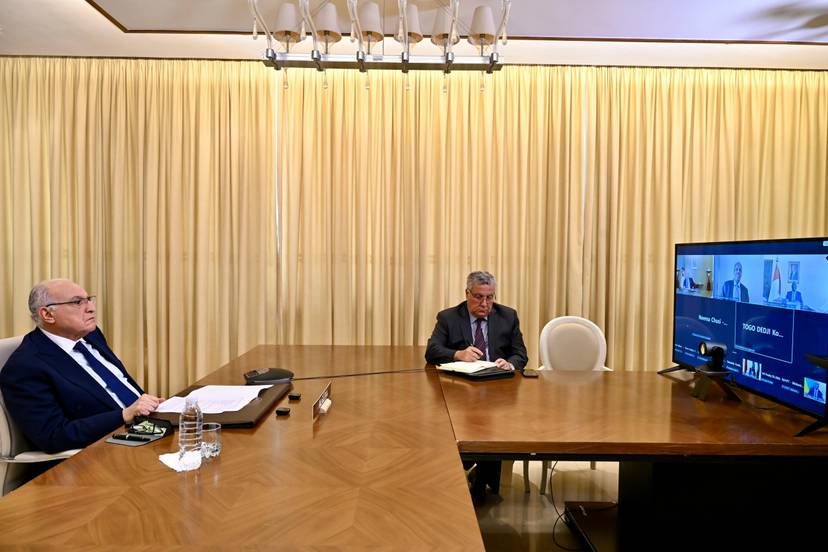
Your Excellency Minister Kacou Léon Adom, Chair of the Peace and Security Council,
Your Excellency Mr. Mahmoud Ali Youssouf, Chairperson of the African Union’s Commission,
Your Excellency Minister Tete Antonio, Chair of the African Union’s Executive Council,
Honourable Ministers,
Distinguished participants,
Ladies and gentlemen,
Allow me, at the outset, to express Algeria’s sincere appreciation to the sisterly Republic of Côte d’Ivoire for convening this timely and most important meeting.
We gather at a moment of great concern for the Democratic Republic of the Congo, for the Great Lakes region, as well as for our Continent as a whole.
The situation in the eastern part of the DRC has indeed reached a critical stage. A stage where the threats of military escalation, humanitarian suffering and failure to deliver on agreed commitments are all converging in a manner that undermines not only the security of the DRC, but also the stability of the Great Lakes region and that of our Continent in its entirety.
As we reflect on the major dynamics that are currently at play in this conflict, we are collectively duty-bound to speak with clarity and act with resolve.
Firstly, we are witnessing a dangerous military escalation that challenges directly the sovereignty and territorial integrity of one of our Member States, the Democratic Republic of the Congo. Algeria strongly condemns all violations committed by armed groups, including the recent occupation of the city of Uvira in South Kivu by the AFC/M23 coalition. Such developments undermine peace efforts, weaken trust among regional actors and carry the risk of destabilizing the whole region.
Secondly, the humanitarian dimension of this conflict has reached an alarming scale that should no longer be underestimated. Algeria expresses its grave concern over the rapid deterioration of the humanitarian crisis in eastern DRC, a crisis that has already caused the displacement of more than 5.7 million people, while nearly 25 million people continue to face acute food insecurity.
Thirdly, and even more troubling, the ever-growing deterioration of the situation on the ground is unfolding against the background of bold commitments made by the parties within the Washington and the Doha Agreements. We have all welcomed these two major achievements with renewed hopes for peace and stability in the region to be restored through diplomatic means. Yet, the huge gap between words on paper and deeds on the ground reminds us, once again, how fragile the peace endeavour remains in this region and how much it requires sustained efforts by all, and most importantly by the African Union itself.
Within such context, Algeria believes that it is high time to make full use of the key mechanisms established by the African Union to address the protracted crisis in eastern DRC. In particular, we refer here to the Security and Cooperation Framework for the DRC and the region, which, in our view, can provide the broader umbrella for a renewed momentum of the merged Luanda and Nairobi processes.
In so doing, the African Union’s renewed collective efforts must be guided by three urgent priorities:
First and foremost, there must be an immediate and unconditional cessation of hostilities. All parties must recommit to the cease-fire agreement without delay, while recognizing and upholding the sovereignty and territorial integrity of the DRC. Accountability must form the cornerstone of our collective response, ensuring that those who perpetuate violence are held responsible for the consequences of their actions.
Second, there must be a robust political, security and diplomatic engagement to achieve sustainable peace in eastern DRC and in the wider region. The security and protection roles of MONUSCO must be adapted to meet the current challenges on the ground, while all diplomatic platforms created to promote dialogue, reconciliation and confidence-building among countries of the Great Lakes region must be reactivated and strengthened.
Third, all efforts aimed at addressing the root causes of the conflict must continue unabated. We sincerely believe that the wealth of the DRC should be a source of cooperation not confrontation, a driver for shared prosperity not regional division, and a catalyst for sustainable development not protracted crises and conflicts. In this regard, Algeria strongly supports the Regional Economic Integration Framework concluded recently between the DRC and Rwanda and calls for the full implementation of this comprehensive and much-needed framework.
Let me conclude by stating the following: the challenges facing the DRC and the Great Lakes region are certainly very serious. Yet, they are by no means insurmountable. Indeed, the Chairperson of the AU Commission has just made very meaningful proposals which I fully endorse.
Algeria remains steadfast in its commitment to an African-led solution to this conflict, one that is firmly grounded in inclusive dialogue and solidly anchored in full respect for international law, including the fundamental principles enshrined in the United Nations’ Charter and the African Union’s Constitutive Act.
We have full confidence in the ability of the African Union, working in close partnership with the regional and international actors, to chart a new perspective for the DRC and for the entire region, a perspective that is not defined by confrontation, conflict and suffering, but rather by cooperation, mutual understanding and shared prosperity.
I wish all of you and your families a happy new year. I wish the African Union more progress and more achievements on the path of peace, cooperation and integration.
I thank you.