
The closing statement of the meeting of the Foreign Ministers of Algeria, Tunisia and Egypt on Libya (Tripartite Neighbouring Countries Mechanism)
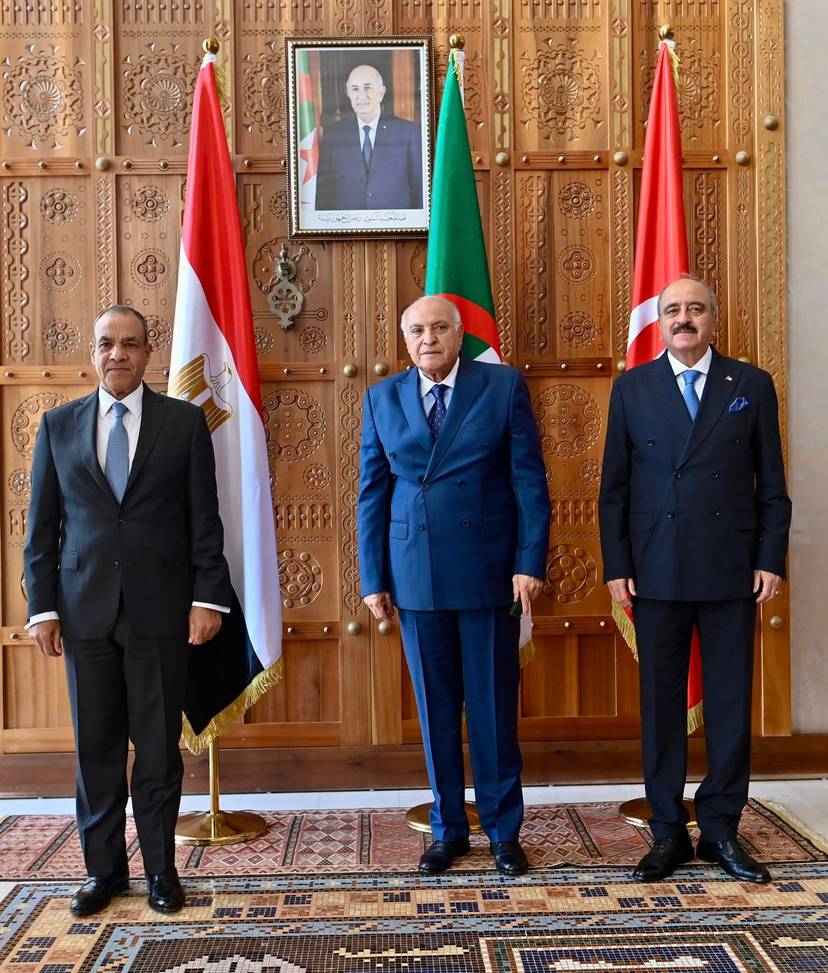
Participants in the ministerial meeting of the Tripartite Neighboring Countries Mechanism (Algeria, Egypt and Tunisia) regarding the crisis in Libya, hosted by Algeria Thursday, emphasized the importance of a Libyan-led and Libyan-owned political settlement to the country’s crisis, with support from the United Nations (UN).
This came in the final statement that crowned the meeting, in which participated the Minister of State, Minister of Foreign Affairs, National Community Abroad and African Affairs, Ahmed Attaf, Egypt's Minister of Foreign Affairs, Emigration and Egyptian Expatriates, Badr Abdelatty, and Tunisia's Minister of Foreign Affairs, Migration and Tunisians Abroad, Mohamed Ali Nafti.
They emphasized the importance of a Libyan-owned and Libyan-led political settlement process to the country’s crisis, with UN support, embodying the political will of all Libyan people to shape their own future and preserve the unity and independence of the Libyan state–land, people and institutions.
The ministers called on all Libyan parties to engage effectively in the political settlement process, prioritize wisdom and dialogue, and put the country’s best interests first in order to overcome current obstacles preventing simultaneous presidential and parliamentary elections that would resolve disputes and finally end this prolonged crisis.
The ministers also stressed the need to achieve comprehensive national reconciliation involving all segments of the Libyan people.
They expressed their belief that the path to resolving the Libyan crisis is one where security and development are inseparable, calling them two interdependent pillars for comprehensive stability. In this regard, they underscored that one cannot be effective without the other.
The ministers concluded that striking a balance between restoring security, building effective institutions and fostering economic and social development is the best way to overcome division and bolster national unity, putting Libya on the path to stability and prosperity.
They also reiterated their countries’ principled stance against any and all foreign meddling in Libya’s internal affairs, citing it as a main driver for dragging out the crisis, deepening political and institutional division, undermining the political process and threatening the security and stability of Libya and its neighboring countries.
They stressed the need for all mercenaries and foreign fighters to pull out from the entire country, and called for efforts to solidify the ceasefire agreement, support the Joint Military Commission and reunify military and security institutions.
The ministers also affirmed the importance of ongoing coordination between their three countries and the UN in handling developments in Libya, to ensure their effective contribution to moving the political process forward.
They pointed out that any initiatives aimed at benefiting the Libyan people must be coordinated with the UN, the Arab League, and the African Union.
They also expressed their willingness to continue supporting the Libyan people in achieving their legitimate aspirations for security, stability and development. The ministers expressed gratitude for Algeria’s role in the UN Security Council in advocating for this shared position, particularly its initiatives to highlight the international community’s responsibility to halt the squandering of the Libyan people’s resources and ensure the proper management of its frozen financial assets.
In conclusion, Tunisia and Egypt extended their heartfelt thanks to Algeria for its generous hospitality in hosting this meeting. The ministers also agreed to hold the mechanism's next meeting in Tunisia, on a date to be mutually agreed upon later via diplomatic channels.
This meeting is part of the sisterly countries’ commitment to coordinate their efforts and strengthen their endeavors to help revive the political process aimed at ending the Libyan crisis. It also aims to ensure the success of the peaceful political settlement under the auspices of the United Nations, including the proposed UN roadmap.